
In a world where pixels reign supreme, digital media art is the dazzling offspring of technology and creativity. Gone are the days when art was confined to canvas and clay; now, artists wield software like wands, conjuring visuals that can dance, breathe, and even interact. Imagine a painting that changes with your mood or a sculpture that responds to your touch—welcome to the future!
Overview Of Digital Media Art
Digital media art encompasses creative works that utilize digital technology in their production, presentation, and distribution. This form of art allows for innovative expressions, often merging various disciplines such as video, sound, and interactivity.
Definition And Scope
Digital media art includes artworks created with digital tools, software, and platforms. Artists manipulate graphics, animations, and installations to craft experiences that engage viewers on multiple levels. Interactive installations let audiences become participants rather than mere observers, enhancing the overall impact of the work. Various forms such as virtual reality, augmented reality, and generative art all fall under this umbrella. These diverse mediums push the boundaries of traditional art, allowing artists to explore new themes and narratives effectively.
Historical Context
Digital media art emerged alongside advancements in technology during the late 20th century. The introduction of personal computers in the 1980s marked a turning point, enabling artists to experiment with digital formats. Early pioneers like David Hockney and Nam June Paik laid the groundwork by integrating video and digital techniques into their practices. The rise of the internet in the 1990s expanded opportunities for artists, fostering collaborations and new forms of engagement. As digital tools have evolved, so has the artistic landscape, with contemporary artists continuously redefining what constitutes art in this digital age.
Key Techniques In Digital Media Art
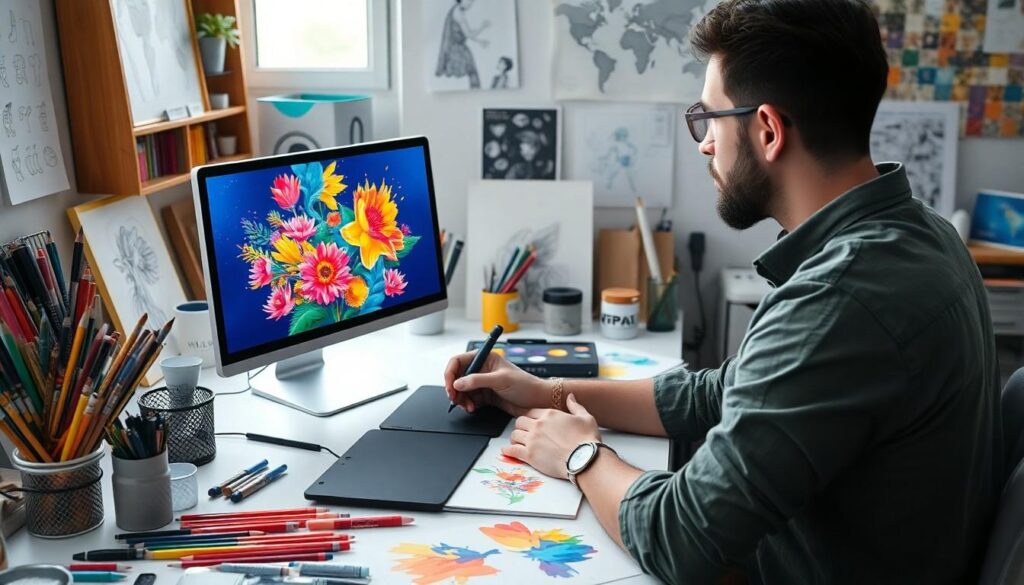
Digital media art incorporates various techniques that showcase creativity and technology. These methods allow artists to push beyond traditional boundaries, engaging audiences in new ways.
Digital Painting
Digital painting utilizes software tools to mimic traditional painting techniques. Artists employ graphics tablets, brushes, and layers to achieve detailed images. With programs like Adobe Photoshop or Corel Painter, creators experiment with textures and colors, bringing their visions to life. The flexibility of digital painting encourages spontaneous creativity, enabling quick revisions without the fear of damaging physical materials. This technique allows for infinite possibilities in style and artistic expression, appealing to both amateur and professional artists.
3D Modeling And Animation
3D modeling and animation leverage computer graphics to create three-dimensional representations. Artists use software like Blender or Maya to sculpt objects and characters, bringing depth to visual storytelling. Texturing and lighting enhance realism in these models, effectively capturing audience attention. Animators can create fluid movements, making it possible to produce compelling narratives that engage viewers. This technique finds applications in various fields, including gaming, film, and virtual reality, expanding the boundaries of how stories are told and experienced.
Interactive Installations
Interactive installations invite audience participation, transforming viewers into active participants. Artists design spaces where individuals can engage directly with the artwork, often using sensors or digital interfaces. Installations might include projection mapping or touch-sensitive surfaces, creating an immersive experience. This form of digital media art fosters dialogue between the artwork and observer, encouraging exploration and contemplation. By leveraging technology, artists create unique environments that adapt to user interactions, highlighting the emotional resonance of art in the digital landscape.
Influential Digital Media Artists
Digital media art features many influential artists who have played significant roles in shaping the field. They push boundaries and introduce innovative techniques that engage audiences in unique ways.
Notable Figures
Nam June Paik stands out as a pioneer. His work in video art laid the groundwork for integration of technology in contemporary art. Jenny Holzer captures attention with her thought-provoking text-based installations. Often, she uses LED and projected displays to disseminate social and political messages. David Hockney transformed traditional painting through digital tools, showcasing new perspectives in his renowned iPad artworks. Each artist brings distinct approaches that redefine visual experiences.
Emerging Talents
Emerging talents are making their mark on digital media art. Refik Anadol explores data-driven art, using algorithms to create mesmerizing visualizations. His immersive installations draw viewers into captivating experiences. Laura Splan fuses art and biology, utilizing digital techniques to express complex themes related to health and identity. Another rising star, Mario Klingemann, leverages AI to generate thought-provoking artwork, challenging traditional notions of creativity. These artists, with their innovative visions, contribute significantly to the evolution of digital media art.
The Impact Of Digital Media Art
Digital media art significantly shapes contemporary culture and technology. It reflects societal changes and offers new ways for artists to convey messages.
Cultural Significance
Cultural impact manifests through increased visibility for underrepresented voices. Digital media art serves as a platform for social commentary and political expression, enhancing public discourse. Artists often address pressing issues like identity, inequality and climate change, fostering awareness among audiences. Global collaboration emerges, allowing diverse perspectives to thrive within this medium. Art becomes a channel for unity, connecting disparate communities through shared experiences. By reshaping traditional narratives, digital media artwork engages viewers and inspires action.
Technological Advancements
Technological breakthroughs enhance digital media art’s capabilities. Advancements in software and hardware expand creative possibilities, giving artists access to new tools for expression. Augmented reality (AR) and virtual reality (VR) transform how audiences interact with art. These technologies create immersive experiences that deepen emotional connections. Artificial intelligence (AI) generates innovative works, pushing boundaries of creativity and authorship. Rapid internet speeds facilitate instant sharing and collaboration, fostering a global arts ecosystem. Artists continuously adapt to emerging technologies, ensuring that digital media art remains at the forefront of creative innovation.
Future Trends In Digital Media Art
Digital media art continues to evolve rapidly, with emerging technologies shaping its future landscape. Artists look toward innovations that redefine how audiences interact with visuals and narratives.
AI And Machine Learning
AI enhances digital media art by generating unique artworks and assisting artists in creative processes. Algorithms analyze vast datasets to produce art styles that emulate historical movements or create entirely new aesthetics. Machine learning tools allow for real-time feedback, enabling artists to adjust their works based on audience reactions. Automated systems like generative adversarial networks (GANs) significantly impact how artists conceptualize and produce their creations. Collaborative projects between AI and human artists enrich the artistic dialogue, pushing the boundaries of creativity while examining the role of the artist in an increasingly automated world.
Virtual And Augmented Reality
Virtual reality (VR) transports viewers into immersive environments where art transcends traditional boundaries. VR installations create interactive experiences that enable artists to tell stories in three-dimensional spaces. Augmented reality (AR) overlays digital elements onto the physical world, offering innovative ways to engage with existing artworks. Artists utilize these technologies to create dynamic pieces that respond to viewer movements and choices. As these tools become more accessible, they redefine how audiences experience art, fostering deeper connections with the work. The potential for storytelling expands, transforming static pieces into living narratives that invite exploration and interaction.
Digital media art is reshaping the artistic landscape in profound ways. As technology continues to evolve, artists are presented with new tools and platforms to express their creativity. This dynamic form of art not only enhances visual experiences but also fosters meaningful interactions between artists and audiences.
The future of digital media art holds exciting possibilities, with advancements in AI, VR, and AR paving the way for innovative storytelling and immersive experiences. By embracing these technologies, artists can challenge conventions and explore uncharted territories in their work.
Ultimately, digital media art stands as a testament to the ever-changing nature of creativity, reflecting contemporary culture while inspiring future generations of artists.

